Posted by Actesso Medical Supports on 27th Nov 2026
Hand and wrist discomfort can make everyday tasks difficult, but similar symptoms do not always have the same cause. Carpal tunnel syndrome and De Quervain’s tenosynovitis involve different structures, which helps explain why advice about supports can differ.
Actesso supplies medical supports. This article provides general information and does not replace assessment, diagnosis or advice from your GP or another qualified healthcare professional.
1. One involves a nerve; the other involves tendons and their sheath
Carpal tunnel syndrome involves pressure on the median nerve as it passes through the wrist. A nerve carries signals, including sensation, between the hand and the nervous system.
De Quervain’s affects two tendons on the thumb side of the wrist and the sheath around them. Tendons connect muscles to bones. Thickening around this passage can make tendon movement painful.
That distinction matters: both can affect use of the hand, but they are not two names for the same problem. See the NHS explanation of carpal tunnel syndrome and North Tees and Hartlepool’s De Quervain’s guidance.
2. Symptoms can feel different—but there is overlap
Carpal tunnel syndrome can cause tingling, numbness and pain in the hand or fingers, sometimes with thumb weakness or difficulty gripping.
De Quervain’s commonly causes pain around the thumb side of the wrist. Gripping, pinching or twisting can aggravate it, and local swelling may occur.
These descriptions are patterns reported in patient guidance, not a checklist for diagnosis. Thumb pain, reduced grip or discomfort near the wrist can have other explanations, including arthritis or an injury. A symptom that seems to fit one description does not rule out another cause.
3. Timing and activity give useful context
Carpal tunnel symptoms are often worse at night. De Quervain’s pain is often associated with using the thumb and wrist. Neither timing nor a particular activity proves the diagnosis.
Before speaking with your GP, note where you feel the symptoms, whether they include altered sensation, when they started, and which tasks make them worse. Mention any injury and how symptoms affect sleep or daily activities. These observations help describe the problem; you do not need to label it yourself.
4. Supports can have different jobs
For carpal tunnel syndrome, NHS guidance describes a night wrist splint that keeps the wrist straight to help relieve nerve pressure. Neutral positioning broadly aligns the hand with the forearm. Read our night splint guide for more context.
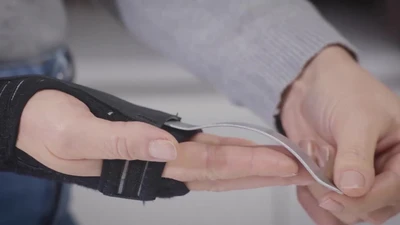
For De Quervain’s, a support may need to include both the wrist and thumb. Gloucestershire Hospitals’ guidance explains that this type of splint can help and that a hand therapist can advise on the most suitable design.
A wrist-only splint and a wrist-and-thumb support do not necessarily restrict the same movements. Names such as “brace” or “spica” are not enough to establish suitability: check the design against the advice you have received. Wearing schedules also differ, so do not transfer instructions from one condition or product to another.
5. Assessment should guide the next step
Your GP can assess your symptoms, examine your hand and decide whether further investigation or referral is needed. Do not use an online movement test or the response to a support as proof of a diagnosis.
Speak to your GP if you are unsure of the cause, symptoms are worsening or recurring, or pain is affecting everyday activities. NHS advice also recommends assessment for tingling or loss of sensation and pain that has not improved after two weeks of home care. You do not need to wait two weeks if symptoms are concerning.
Seek urgent help for severe pain, a change in shape or colour, inability to move the hand or hold things, or loss of feeling. Follow the urgent advice on the NHS wrist pain and thumb pain pages. Do not delay assessment of a possible fracture while trying a retail support.
The underlying difference at a glance
This compares the structures involved, not a way to identify your own condition.
| Condition | Structure involved | Support consideration |
|---|---|---|
| Carpal tunnel syndrome | Median nerve at the wrist | Wrist positioning is central to night-splint advice |
| De Quervain’s tenosynovitis | Thumb-side tendons and their sheath | A splint may need to support both wrist and thumb |
Looking at support designs after taking advice?
If you are unsure what is causing your symptoms, speak to your GP before choosing a support. Once you know what type has been recommended, compare the construction and fit with that advice:
- Actesso Breathable Wrist Splint — a wrist design with an under-wrist metal stay.
- Actesso Neoprene Thumb Support Spica with Metal Splint — a different design covering the wrist and thumb area.
These links illustrate design differences; they are not a personalised treatment recommendation. Check the product instructions, materials, fit and correct hand. Actesso can help with product and sizing questions; your GP or treating clinician should advise on the cause of symptoms and treatment.
Sources and further reading
- NHS — Carpal tunnel syndrome
- North Tees and Hartlepool NHS Foundation Trust — De Quervain’s tenosynovitis
- Gloucestershire Hospitals NHS Foundation Trust — De Quervain’s syndrome of the wrist
- NHS — Wrist pain
- NHS — Thumb pain
Prepared by Actesso Medical Supports. Sources checked 27 November 2026. General information only; not a diagnosis or individual treatment plan. NHS links do not imply endorsement of Actesso products.